TL;DR
Black tie in the UK follows specific conventions that are well-established and worth understanding properly. The core is a dinner jacket, typically in black barathea or midnight navy, worn with a white dress shirt, black silk bow tie, and black formal shoes. This guide explains every element, including the variations that are accepted and the mistakes that are not.
Quick Facts
- Standard dinner jacket: Black or midnight navy barathea, single or double-breasted
- Lapel styles: Shawl, peak, or rarely notch; shawl is most traditional
- Shirt: White, with pleated or pique front and double cuffs
- Bow tie: Black silk, always self-tied
- Shoes: Black patent leather Oxford or opera pump
The History and Tradition of British Black Tie
The black tie dress code, as it is understood in the UK today, developed in the late nineteenth century as a slightly less formal alternative to the white tie and tailcoat that dominated Victorian evening dress. The dinner jacket, originally called the smoking jacket, was an innovation associated with the Prince of Wales, later Edward VII, who was known for his interest in informal alternatives to the formality that surrounded him. Over the following decades, the dinner jacket replaced the tailcoat for the majority of evening occasions, and the conventions around it became firmly established.
British black tie has a particular character that distinguishes it from the American tuxedo tradition. It is somewhat more conservative in cloth choice, in lapel treatment, and in the overall aesthetic: the aim is understated elegance rather than the showier approach more common in American formal wear. The barathea dinner jacket, the proper self-tied bow tie, the white dress shirt, and the highly polished shoe represent an ideal of evening dress that values precision and restraint above all else.
The Dinner Jacket: Core Choices
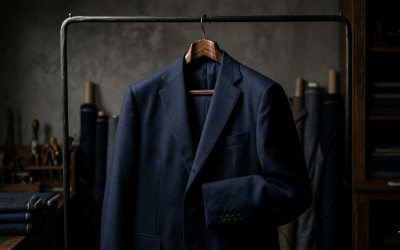
The dinner jacket for British black tie occasions is most commonly made in black barathea, a closely woven fabric with a fine granular texture and a slight sheen that is ideal for formal evening wear. Midnight navy is an equally correct and increasingly popular alternative. In daylight, midnight navy reads as black; in evening light and in photographs, it has a richness and depth that some regard as even more beautiful than black itself. The cloth is usually faced with a contrasting silk or grosgrain on the lapels and the trouser seam, which provides the visual distinction that marks dress clothes from ordinary business attire.
The single-breasted dinner jacket with a shawl lapel is the most traditional British form. Peak lapels are also entirely correct and are associated with a slightly more formal or assertive aesthetic. Double-breasted dinner jackets, which are always worn with peak lapels, have a more substantial visual presence and are appropriate for the grandest occasions. All three are correct; the choice depends on personal preference and the character of the occasion.
The Shirt, Bow Tie, and Accessories
A white dress shirt for black tie should have a stiff or soft pleated or pique bib front. The collar is either a turn-down or a wing collar; both are correct, though the wing collar is more traditional and the turn-down is now considered by many to be the cleaner, more modern choice. Double cuffs are standard, requiring cufflinks. The shirt front is buttoned with dress studs, small ornamental buttons that replace the standard shirt buttons and contribute to the ceremonial character of evening dress.
The bow tie is always black and always silk. Self-tying is not optional; it is the mark of a man who knows what he is doing. A pre-tied bow tie, however well made, lacks the slight natural irregularity that gives a properly tied bow its character, and it is immediately recognisable to anyone who wears black tie regularly. Tying a bow tie takes five minutes to learn well and is one of the small but significant skills of men’s formal dress. Between the shirt and the jacket, either a white or black waistcoat or a black cummerbund is traditionally worn.
Shoes and the Complete Picture
Black patent leather shoes are the ideal choice for black tie in the UK. A plain cap-toe Oxford in patent leather is correct for any occasion. Patent leather opera pumps, which feature a grosgrain bow, are the most traditional choice and the one most associated with formal British evening dress, though they require a degree of confidence. For clients who find patent leather uncomfortable, a very highly polished calf Oxford can substitute at less formal black tie events, though patent is the first choice for significant occasions.
Socks should be black. Trousers should carry the single braid stripe of silk down each outer seam. Braces rather than a belt hold the trousers up correctly. The pocket square is white in plain cotton or linen, folded flat. Cufflinks should be plain or subtly decorative in silver or white gold. Everything about the black tie ensemble works together to produce an effect that is at once formal and elegant, and every element contributes to or detracts from that effect.
Bespoke Black Tie: The Difference It Makes
A bespoke dinner jacket makes a more significant difference to the overall quality of the black tie ensemble than a bespoke suit might make in a business context. The dinner jacket is typically worn without a jacket to conceal fit issues, it is expected to sit perfectly through the course of a long evening of movement, and it is frequently photographed in lighting conditions that reveal cut and silhouette very clearly. A hired or off-the-peg dinner jacket will approximate the right shape. A bespoke dinner jacket will achieve it.